
Notice how we talk about time—we spend time, waste time, save time, take time—all suggesting we have control over time!
Judging by the number of times I’ve heard people say, “I don’t have enough time,” it sounds like there is a universal shortage of it. How do we get more?
We have the talents and skills to make many things, but we can’t make more time. So, the real question is: “How do we use the time we have in the most fulfilling way?”
If you were given a month free of responsibilities how would you be spending your time?
Do what you love
If you were given a month free of responsibilities how would you be spending your time? Does your response inform what your priorities should be? Even amidst your busy daily activities, if you are not taking some time for doing what you love, you’re probably not a very happy camper. In fact, if you find you are slightly agitated on a daily basis, it may be a sign that something is blocking you from doing what you may only subconsciously believe you should be doing. Your values are trying to tell you something.
At this point in my life, I strongly desire to write down legacy information for the next generation to enjoy reading and to possibly learn from my life lessons. I know that if I’m not making time for writing in my weekly routine, every request of my time becomes an irritation. That all changes when I’m doing what I know I should be. Then I am much more flexible, accommodating, and joyful. What about you? What should you be making time for?
Harnessing time
While we cannot manufacture more time, there are at least a couple ways we might be able to better handle what we do have. I want to talk about two of these today: setting priorities and scheduling.
Practices reveal priorities
At the beginning of the day, my first priority is to turn to God. He is the only one who can control time—partly because he is outside the time-space continuum and mostly because he’s God! Notice what 1 Peter 3:8 says about God and time: “But do not forget this one thing, dear friends: With the Lord a day is like a thousand years, and a thousand years are like a day.” Clearly, God has time for everyone and everything! How can we tap in?
“But do not forget this one thing, dear friends: With the Lord a day is like a thousand years, and a thousand years are like a day.” 1 Peter 3:8
Ordering time
Throughout the Bible, we see God measuring things. Measurements set boundaries. For humans, time is measured by days and nights, months, years, and a lifetime. Within those boundaries, we can order our time by setting priorities—making time for what’s important. and by putting them on the calendar— taking time to do them.
Making the most of your time
Do you have tricks and strategies for making the most of your time? Do you schedule time to do the things you love? I’d like to hear them! Here are a few that work for me:
- By rising early in the morning, I can avoid interruptions and spend time with God meditating on his Word. When I take time to make this my first priority, God seems to make up for it in other ways. For example: maybe I arrive at a solution or idea sooner rather than agonizing over it for hours. Or a client serendipitously reschedules an appointment freeing up an already packed schedule.
- Next, I intentionally schedule doing things that I want to do. For me, it is being with grandchildren or taking time for writing or having coffee with a friend. If I have a big project I’m working on, I break it into small deadlines and try my best to meet them.
- I make appointments with myself putting them on the calendar. I have done this with writing days. I set up a consistent day of the week to write, put it on the calendar like an appointment, and protect it from interruptions! When another invitation comes you can say, “Oh sorry, I have another appointment scheduled at that time.”
- When up against a deadline, I used to worry myself into a migraine. Now, I use this little trick. While I’m working, I’m telling myself: “There is enough time, there is enough time.” It serves two purposes: 1. It reminds me to relax and, 2. Somehow miraculously, there is always enough time!
Living in the moment
I know that I am going to hear from my friends who are constantly reminding me to be in the moment! OK, I tend to be a planner and when something interferes with my schedule, it throws me off a little. I’m trying to be flexible! I applaud those of you who can savor every moment! Are you someone that in whatever circumstance, you find an opportunity for enjoyment and appreciation? You have something to teach me!
What are your tips and tricks for making the most of time? What are you taking time to do that you love? I want to hear from you. Leave me a comment!
Write On!
Kathy
P.S. Coming Soon: Writer’s Block Busters
Since writing is something I should be making time for, my next blog series addresses  breaking through writer’s blocks (both physically and mentally). In the next few weeks, I’ll be blogging on “Eight Writer’s Block Busters.” If you have some tips that work for you, please share them in the comments area! We will all thank you!
 The other day my grown daughter commented, “Mom, you are always writing for someone else, why don’t you write for your family?” She proceeded to remind me about some children’s books I had started years ago when she was growing up. Since then, her words keep ringing in my ears. It got me questioning, “Why am I writing?” How about you?
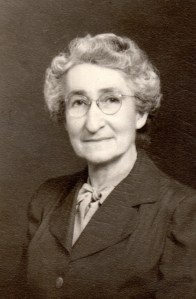 My husband has a journal from his great grandmother, Lucy, who lived from 1878 to 1960. It is entitled: “Seventy Years of Living.” It is profoundly interesting reading about what life was like, but not nearly as interesting as the lessons we learned from her life and the characteristics I see present in her great, great grandson! We learned of a young couple who were intent on building a farm and a lifestyle. They were entrepreneur types always expanding at great financial risk. Unfortunately, they borrowed rather than saved to have the things they thought they needed. They were particularly impressed with the latest and greatest inventions of the time—like a flush toilet for example! Dean’s great uncle, the oldest of the children, complained he’d have to run upstairs and refill it with water every time anyone flushed! Funny? Not so very much. They lost the farm. But they endured and that’s the real lesson.
 On another occasion, we were cleaning out his grandmother’s attic and discovered a gorgeous family photo album. As we looked through the obviously well-preserved document of history, nameless faces stared back. Not a single photo was named or dated. It was meaningless to us! It might as well have been a book of strangers! We passed it on to another relative who didn’t know them either. Our children will never know who from that side of the family they might resemble. Please, label your pictures! Someone will appreciate it one day.
 perspective provide the proper shape, proportion, and position to make things appear three dimensional and realistic. Usually one-point perspective is taught first where you are at the center of the picture and the vanishing point is right in front of you. Much more interesting is two-point perspective as seen in the picture at the right. There are two vanishing points one at each side of the picture revealing more dimension. Imagine yourself standing in different locations in this picture, you’d have an altered view of the very same reality. In writing editorials, offering differing points of view can bring balance and validity to your message. In your stories, providing differing points of view can add interest and dimension to your characters.
 Two-point perspective also reminds us that there are two sides to an argument. You don’t have to agree with the other person but viewing things from their position will give you insights into their backstory. Ordinarily, I’m more tenderhearted about bunnies, but my response was provoked by the amount of work I had put into nurturing those flowers and plants and uncharacteristically, I was already planning that rabbit’s demise. It is a reminder that our beliefs, personality, and life experiences are like the hidden perspective guidelines that shape how we respond to what we see. Try tracing these out in your next conversation.
 Building a platform


 WOW! Write On Wisdom
You must be logged in to post a comment.